Buying noodles or some other Chinese food from a kiosk in China Town, sitting in the open air lounge or going back to your car where friends or family await for the hot and yummy noodles, playing with chopsticks and dealing with those “hard to get” noodles, I bet you never thought much about the bearers of the good news: the noodle boxes.
And it is perfectly fine!
People do not think a lot about packaging; they pay for and they care for the product only. However, sometimes the packaging of some products out shines the product because of novel design and structure or very pleasant and unique finish.
Same is the case with Chinese noodle boxes. They are not ordinary boxes; they have something special to them.

So:
Without having you wait, here is the anatomy of noodle boxes; you can see what they are made of and more especially, why they are different than other boxes.
2. Material
The material of wholesale noodle boxes is mostly, if not always, cardboard. It is because cardboard is cheap and because it is perfect for customization. The other two most famous packaging materials such as Kraft and Corrugated fiberboard are not printing-friendly, and the later also lacks the flexibility and the fine touch which a packaging material is known for.
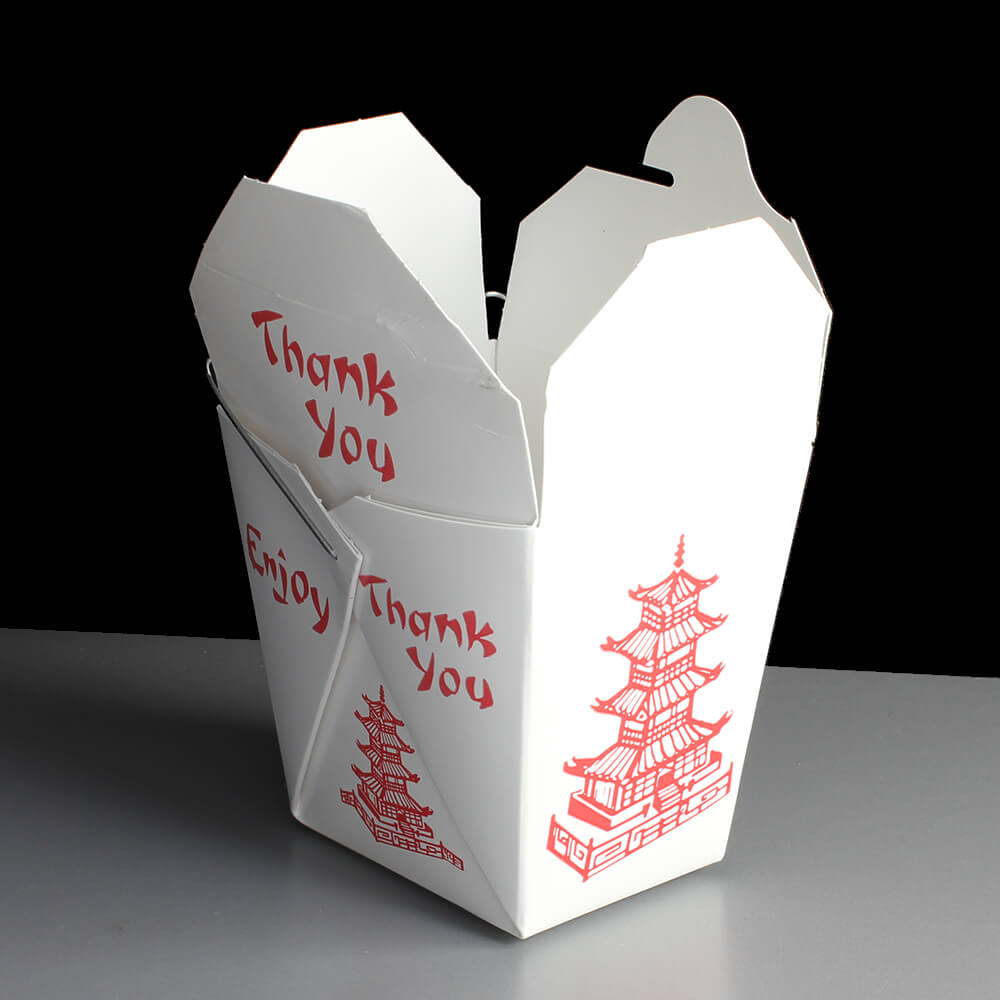
Speaking of material, it is good to know that all cardboard stock sheets are not of the same thickness. They may vary from a very thin or a very thick model. The thickness may vary from a 12pt cardboard stock to a 24pt or more cardboard stock.
2. Printing
The cardboard printing and packaging companies can offer printing in digital as well as offset styles. The color models are mostly CMYK or Pantone, but some other model can also be offered.

When they let the customers choose the color model and code, it gives the customer full freedom to choose the color that they want to see on their packaging and thus they get the exact color because of color modeling system and codes.
3. Basic Shapes and Structures
The basic shapes and structures of cardboard boxes or cheap noodle boxes that you see at noodle kiosks, is the same as any other cardboard box. However, there are a few exceptions.
As far as the bottom is concerned, it is more or less same as the bottom of other boxes. It has an auto-bottom feature than enables the packaging company to ship the boxes in a flat shape.
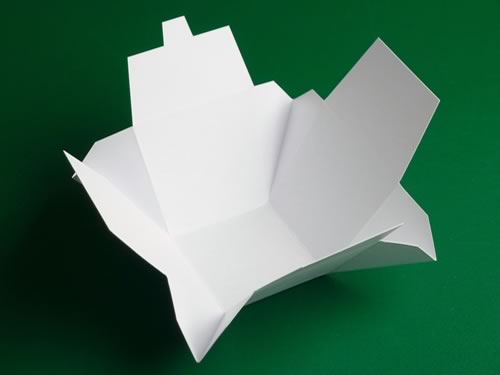
The top of the box is often left opened or in other cases it will have a 4 flaps opening. The vendor tucks those flaps into each other and that’s how the heat and freshness of noodles is sustained.
4. Convertible Packaging
However, the biggest and most unique feature of noodle boxes is their convertible nature. I bet that what I am about to tell you about the noodle boxes (something that you’ve been handling for too long) is new to you or at least to the majority of noodle lovers.
The noodle boxes are designed to be opened into a wide plate from which one can easily pick and eat noodles. Unbelievable, right? But the making and design of noodle boxes is slightly different than simple boxes.
You unglue or unpin the walls of the box, slowly and gently, and you see that box turns into a wide and open plate from which you can easily eat noodles without dropping them or have difficulty in picking them.
So: